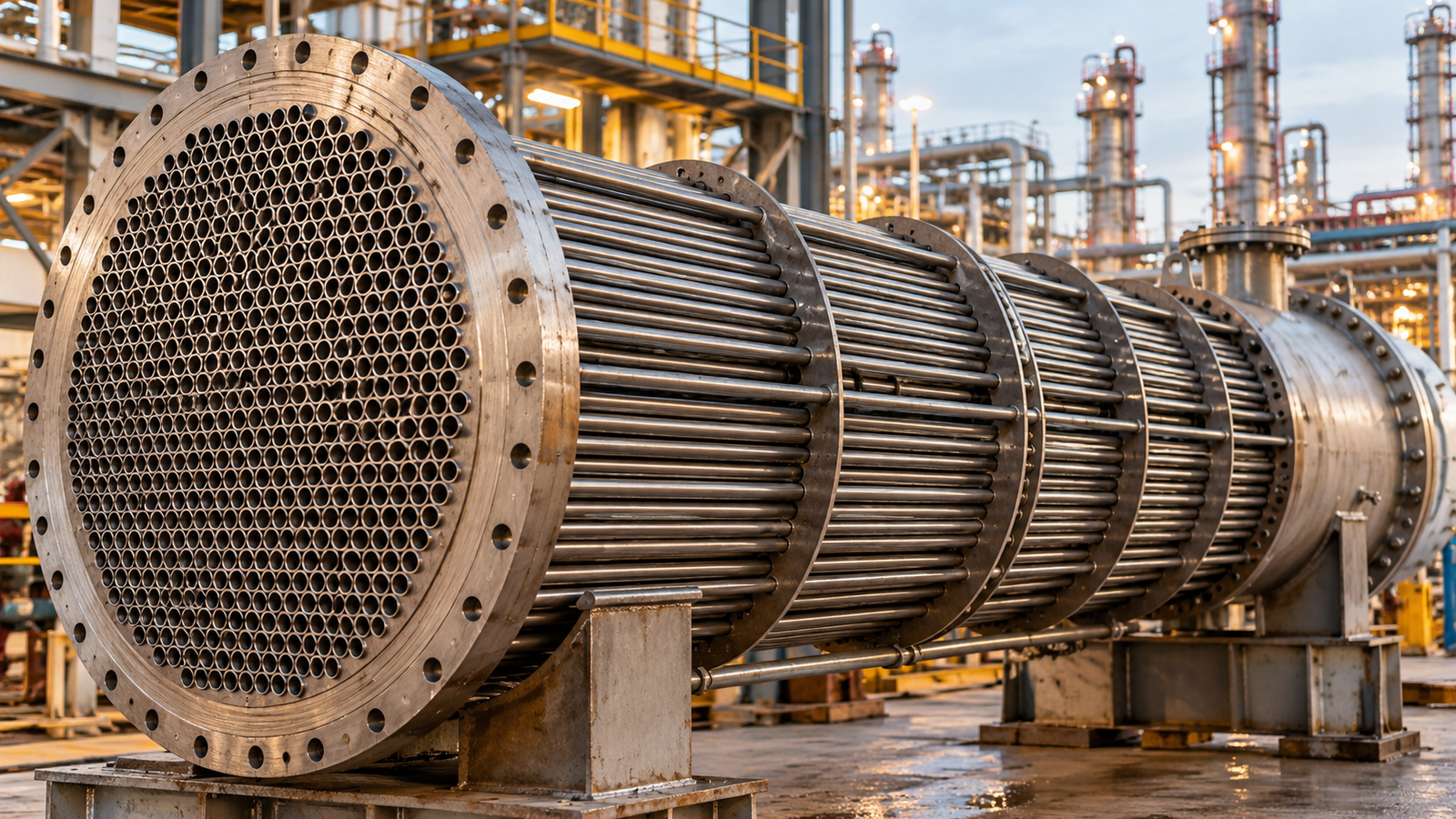
TSI supplies precision tubing for shell-and-tube heat exchangers, condensers, coolers and reboilers across refining, petrochemical and power generation. Material is selected according to the cooling medium and process conditions on both sides of the tube — see technical basis below.
Heat exchanger and condenser tubing performs a fundamentally different function from instrumentation and pressure-control tubing: it provides the heat-transfer surface between two fluids while maintaining separation between the respective process streams.
These tubes are used in shell-and-tube heat exchangers, condensers, coolers and reboilers across refining, petrochemical, chemical processing, power generation and other industrial facilities. Applications may involve process heating, cooling, condensation, steam service, cooling-water systems or seawater-cooled equipment.
Material selection is primarily driven by the chemistry and temperature of the fluids on both sides of the tube. Seawater and chloride-rich cooling environments may require titanium, copper-nickel or suitable high-alloy materials, while duplex, super duplex, stainless steels and nickel alloys may be selected for more demanding process-side or cooling-side conditions.
The selected material must consider corrosion, erosion, fouling, thermal conditions and the differential pressure between the tube side and shell side. A material that is suitable for one side of the exchanger may not be suitable for the other. Cooling-water chemistry, oxygen content, chlorides, velocity and biological activity may also influence tube performance.
Heat exchanger and condenser tubes are manufactured to the applicable material and product standards, which may include ASTM specifications for seamless or welded heat-exchanger, boiler and condenser tubing. The appropriate standard depends on the selected material, manufacturing route and equipment specification.
Manufacturing may include seamless, welded and welded-and-redrawn construction depending on the alloy and application. Dimensional control is particularly important for tube bundles, tube-to-tubesheet joints and U-bends. The mechanical design of the complete exchanger must consider tube-side pressure, shell-side pressure, temperature, thermal expansion and differential pressure rather than treating the tube as an isolated pressure component.
Inspection may include dimensional inspection, surface examination, material certification and heat traceability, eddy-current or other applicable non-destructive examination, hydrostatic or other pressure testing and inspection of U-bend sections where required by the product or project specification.
Tube integrity is a process-safety consideration because a failed exchanger tube can allow two normally separated fluids to mix. In refinery, petrochemical and chemical service this may result in contamination, loss of containment or an unexpected pressure or chemical interaction between the two systems.
Service life depends on material compatibility, operating temperature, fluid chemistry, velocity, fouling, erosion, vibration and maintenance conditions. Periodic in-service inspection is therefore an important part of exchanger reliability, particularly where corrosion, erosion or tube-wall degradation is a known risk.
TSI supplies tubing for shell-and-tube heat exchangers, condensers, coolers and reboilers across refining, petrochemical, chemical processing and power applications, including seawater-cooled coastal and offshore facilities and air-cooled installations.
Product Range
8 items. Sizes, wall thickness and connection system confirmed at enquiry unless stated.
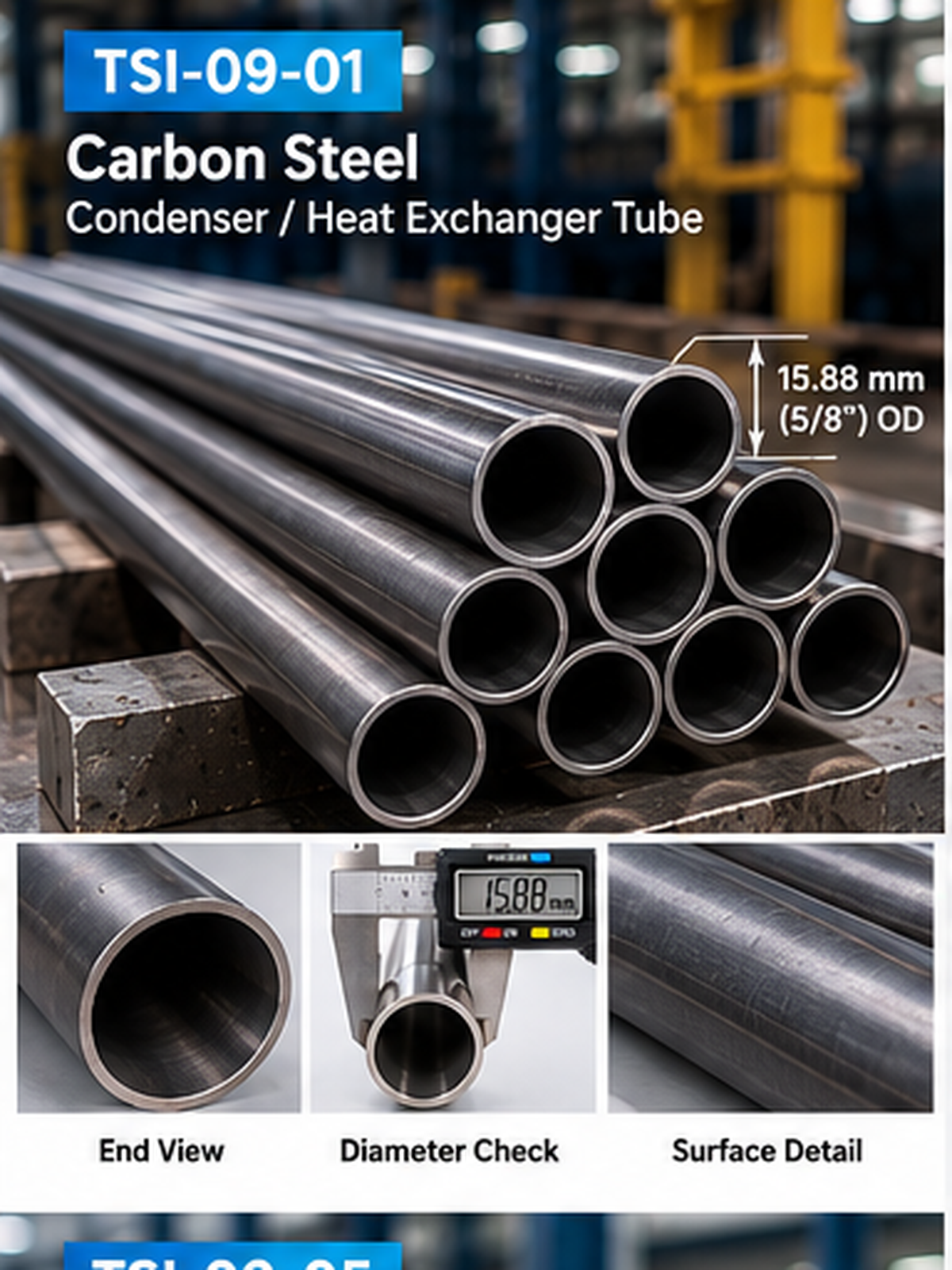
General-purpose carbon steel tubing for non-corrosive hydrocarbon-side heat exchanger and cooler service.
Sourced to order, subject to specification and enquiry — exact size, wall thickness and connection system confirmed at RFQ.
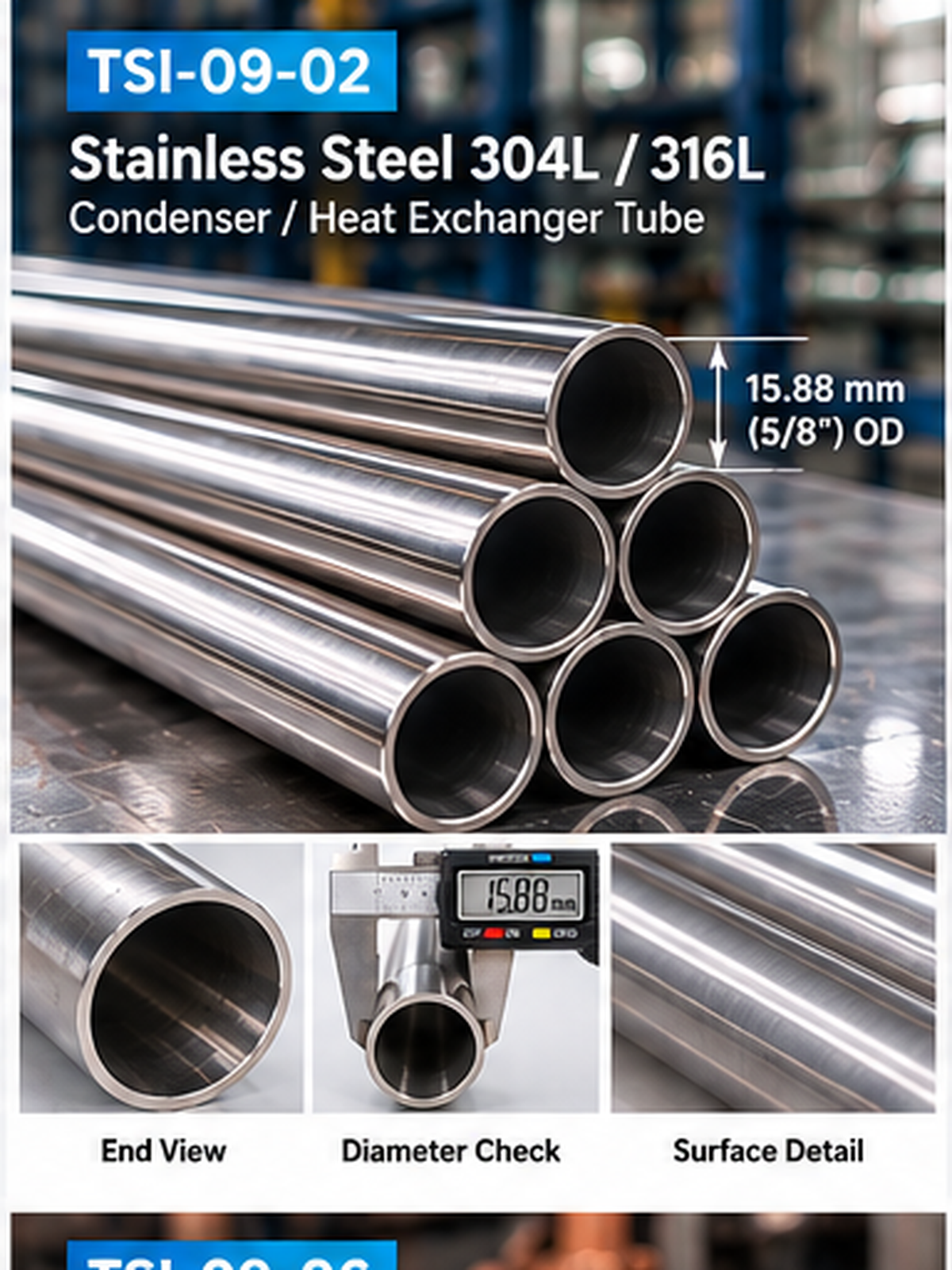
Austenitic stainless steel tubing for general refinery and petrochemical heat-transfer duty.
Sourced to order, subject to specification and enquiry — exact size, wall thickness and connection system confirmed at RFQ.
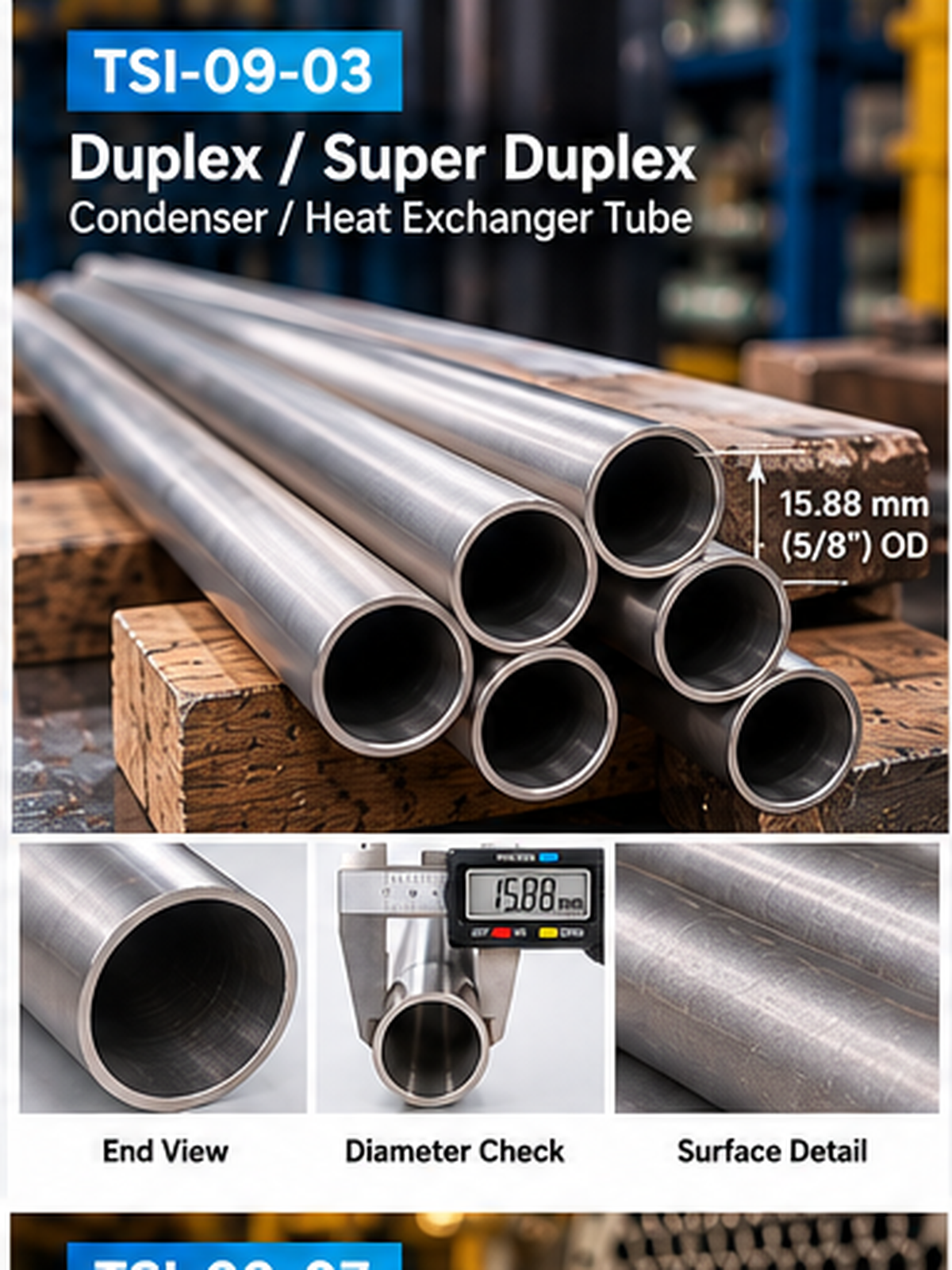
Duplex or super duplex tubing for chloride-bearing process-side or cooling-side conditions.
Sourced to order, subject to specification and enquiry — exact size, wall thickness and connection system confirmed at RFQ.
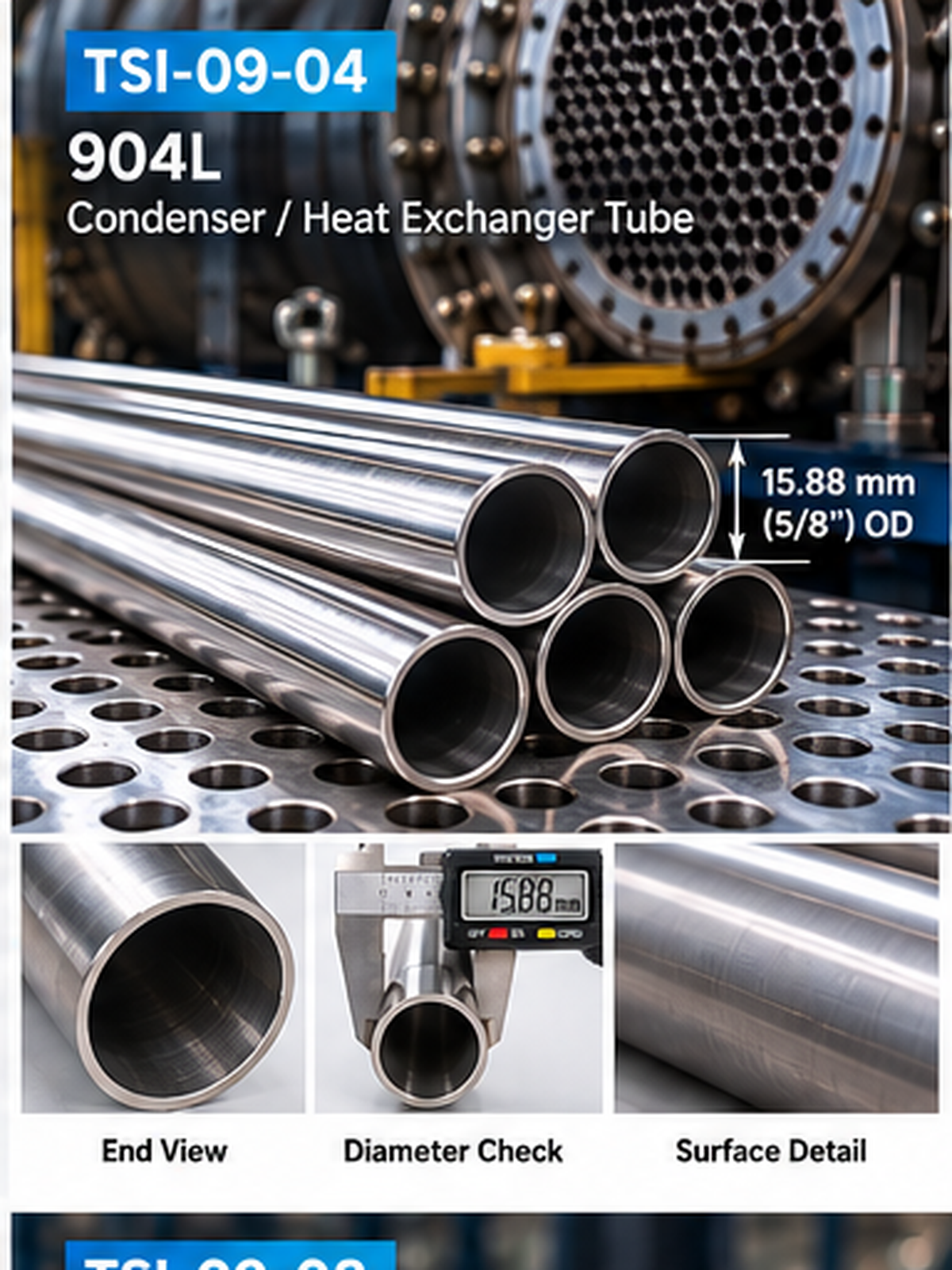
High-alloy austenitic stainless steel for demanding condenser cooling-water chemistry.
Sourced to order, subject to specification and enquiry — exact size, wall thickness and connection system confirmed at RFQ.
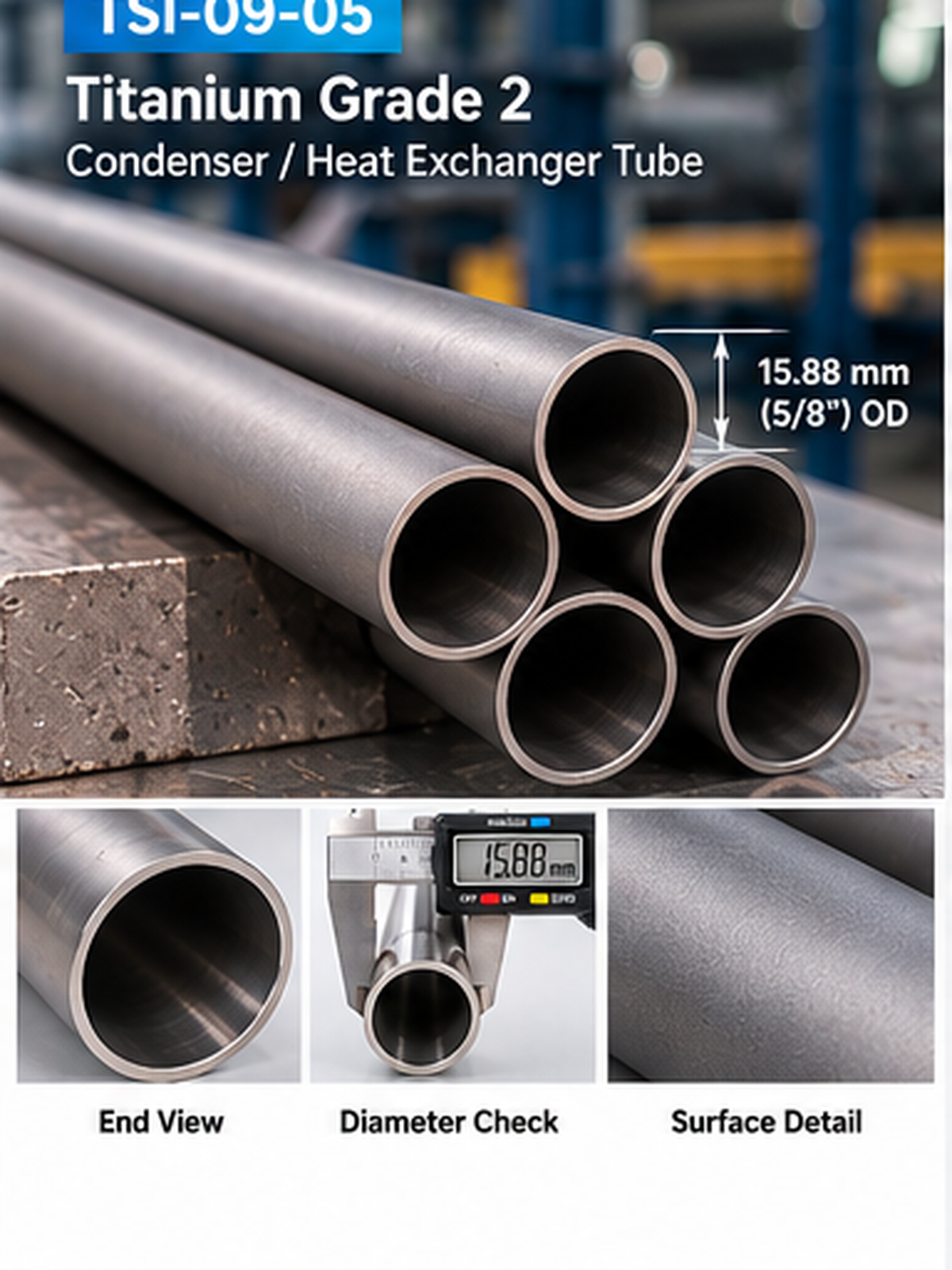
Commercially pure titanium for seawater-cooled condenser service where maximum corrosion and biofouling resistance is required.
Sourced to order, subject to specification and enquiry — exact size, wall thickness and connection system confirmed at RFQ.
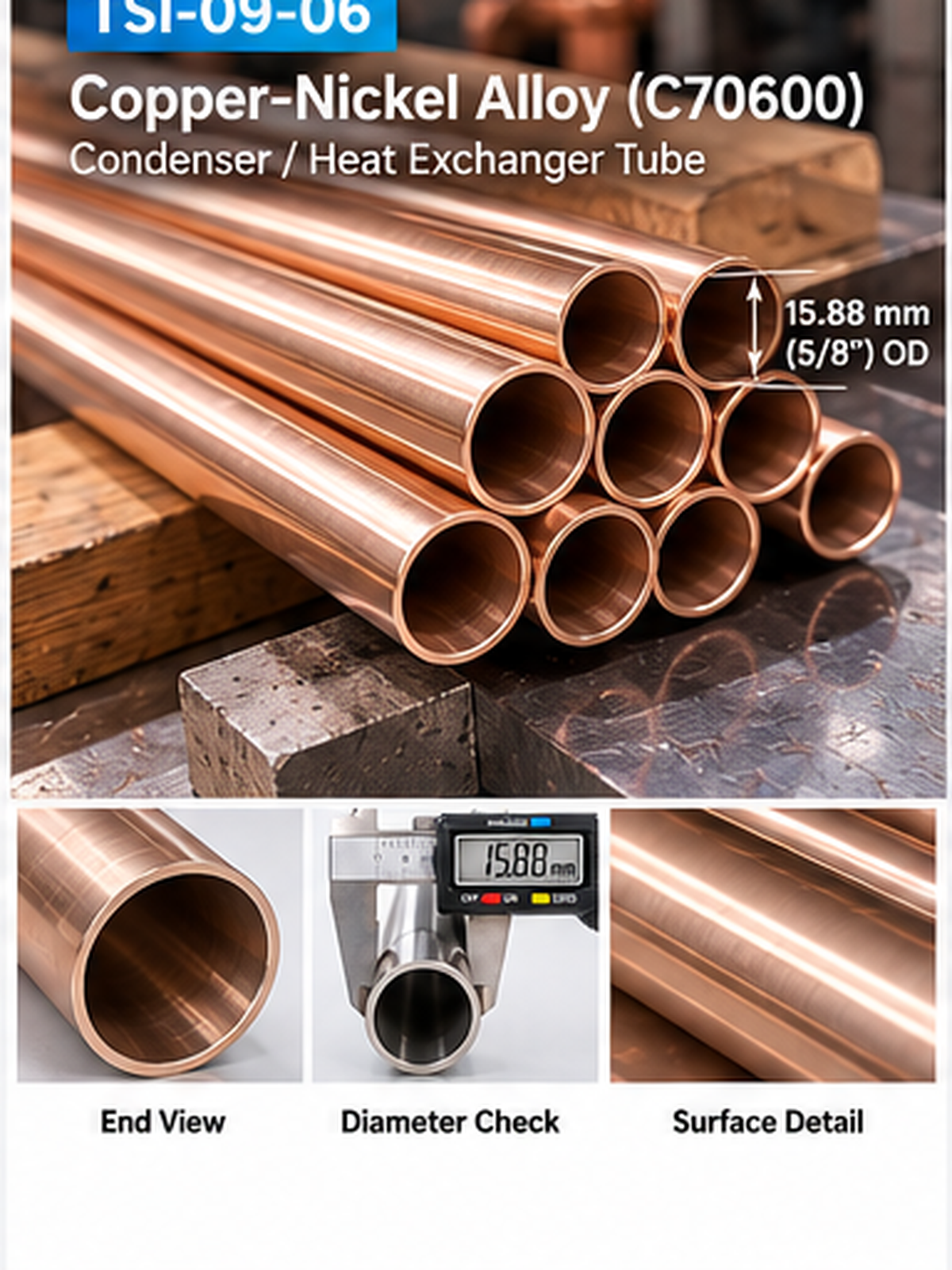
90/10 or 70/30 copper-nickel alloy, an established material for seawater-cooled surface condensers.
Sourced to order, subject to specification and enquiry — exact size, wall thickness and connection system confirmed at RFQ.
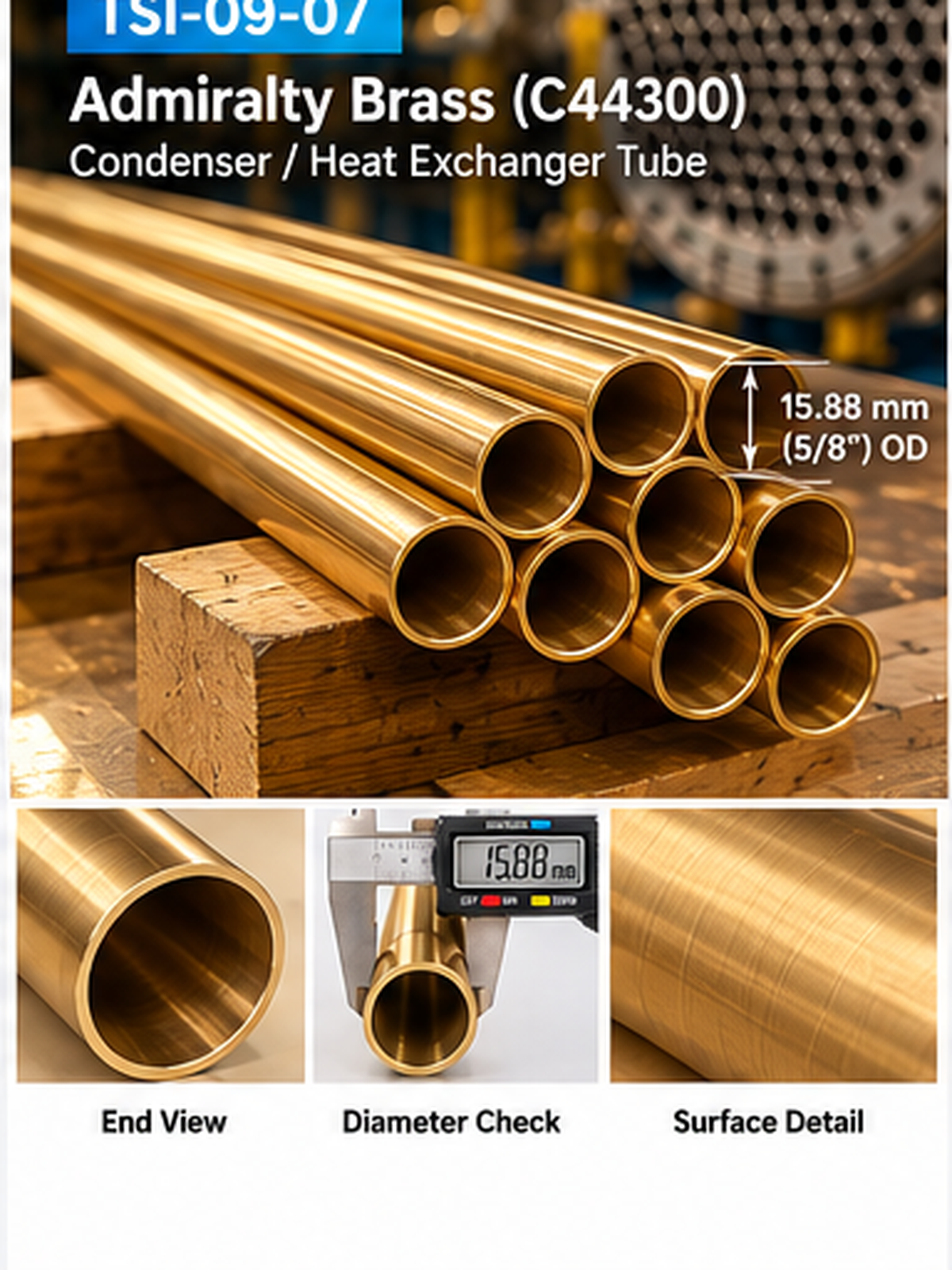
Traditional copper-alloy condenser tube material for moderate-chloride cooling-water service.
Sourced to order, subject to specification and enquiry — exact size, wall thickness and connection system confirmed at RFQ.
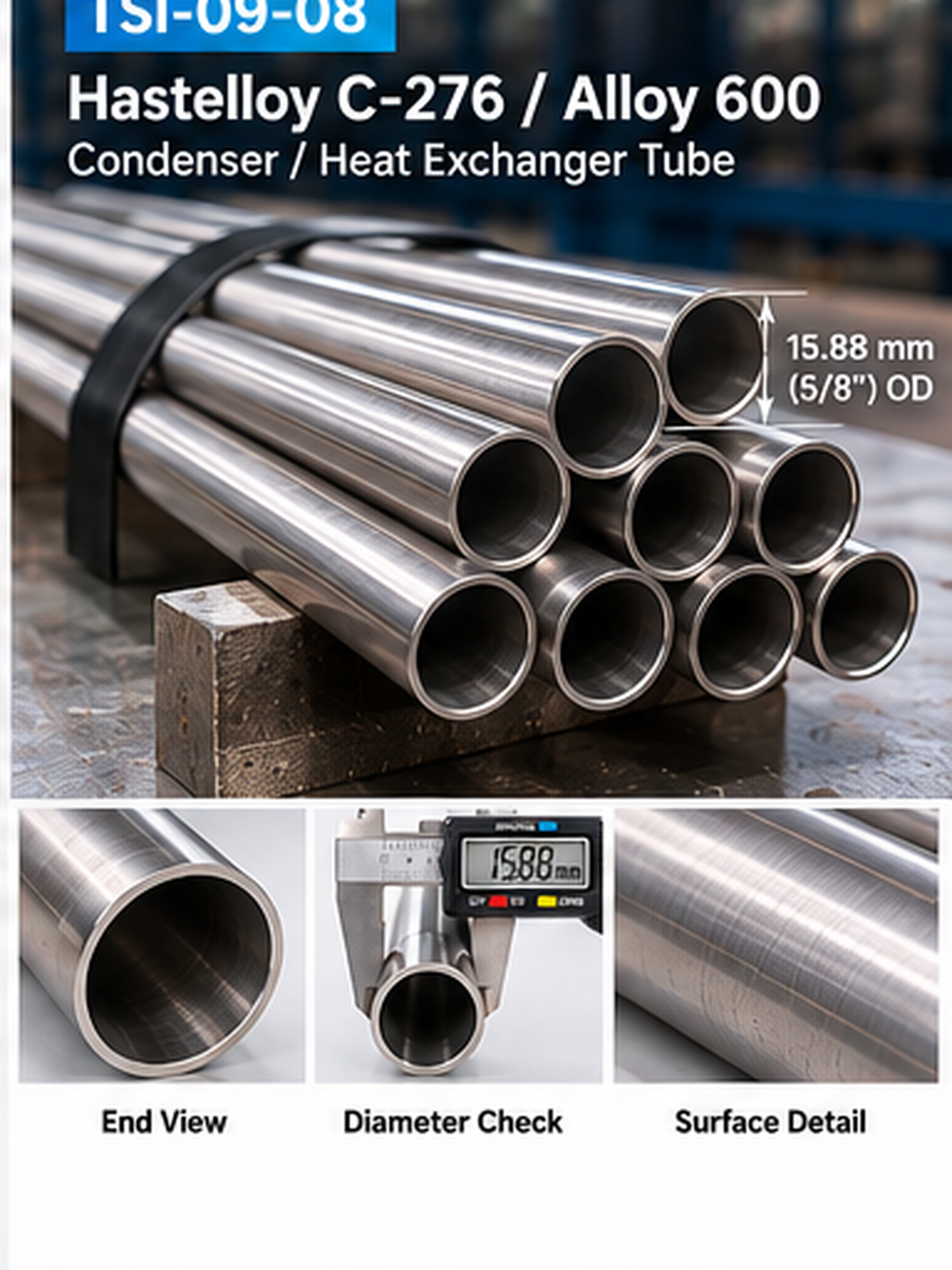
Nickel-based alloy tubing for the most chemically aggressive heat-transfer duty.
Sourced to order, subject to specification and enquiry — exact size, wall thickness and connection system confirmed at RFQ.