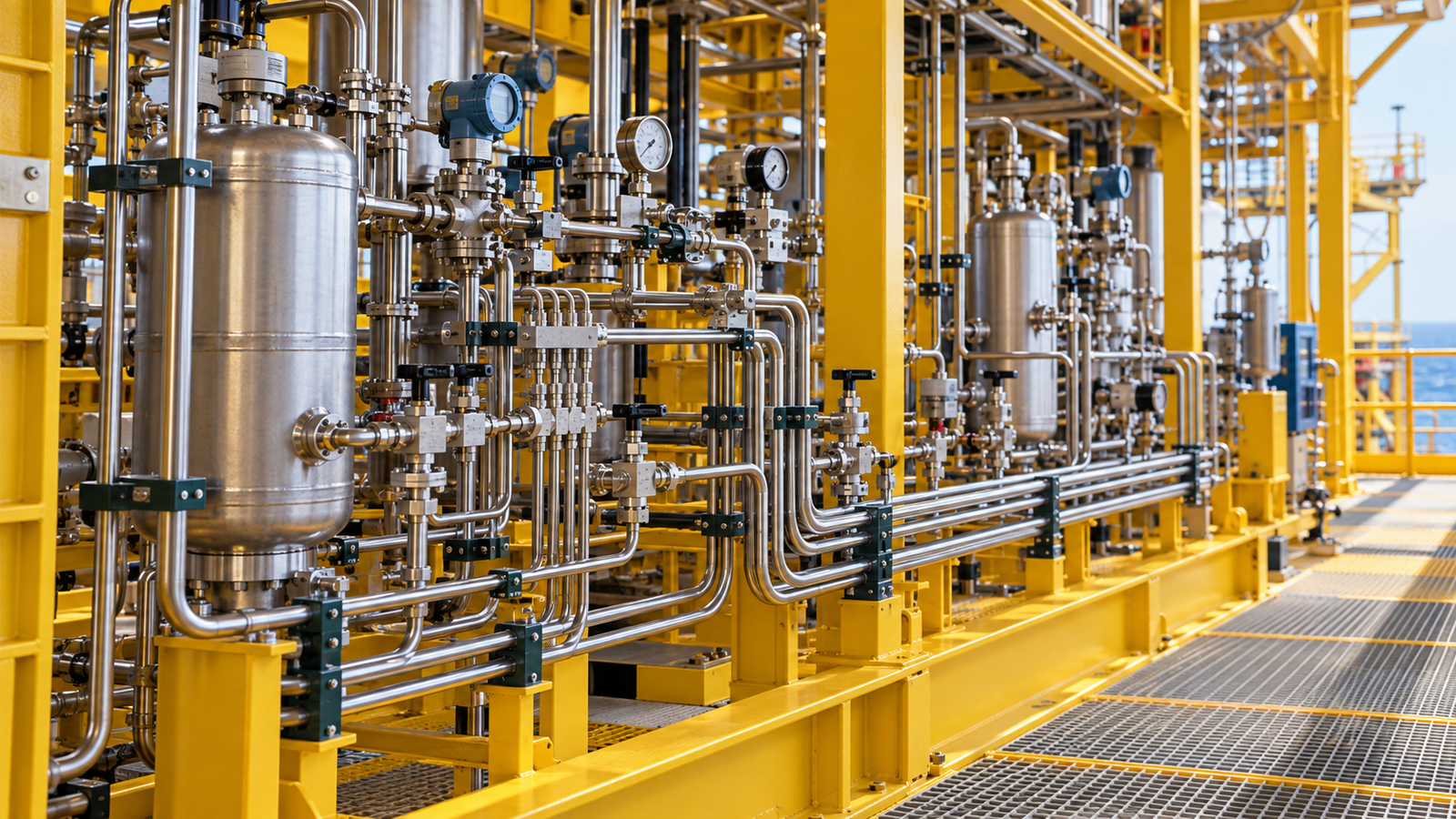
TSI supplies corrosion-resistant alloy tubing — duplex, super duplex, high-alloy stainless and nickel alloys — for offshore, subsea, sour-service and chemically aggressive applications. Material selection is matched to the actual service environment — see technical basis below.
CRA tubing is selected where the service environment presents corrosion mechanisms that cannot be adequately addressed by conventional stainless steels. Applications include offshore and subsea systems, seawater and chloride-containing environments, chemical processing, chemical injection, sour oil and gas production and other aggressive process services.
Material selection is driven by the actual corrosion environment. Chloride concentration, temperature, pH, hydrogen sulphide exposure, fluid chemistry, mechanical stress and pressure may all influence the suitability of a material. Duplex and super duplex stainless steels can provide increased resistance to chloride-related corrosion mechanisms, while high-molybdenum stainless steels and nickel alloys may be selected for more demanding chemical or corrosion conditions.
The CRA category includes different material families with significantly different chemical compositions and mechanical properties. Duplex and super duplex grades, 6Mo stainless steel, nickel alloys and selected titanium grades should therefore not be treated as interchangeable simply because they are all classified as corrosion-resistant materials.
Applicable ASTM specifications depend on the individual alloy and product form. Manufacturing may include seamless, welded, welded-and-drawn or other controlled manufacturing routes depending on the material and application. Material condition, heat treatment and manufacturing route can influence both mechanical properties and corrosion performance.
For sour-service applications, alloy selection alone does not establish compliance. The material and its condition must be evaluated against the actual service environment and the applicable requirements of NACE MR0175 / ISO 15156, including the relevant hydrogen sulphide conditions, temperature, environment and stress limitations.
Quality assurance is particularly important for CRA tubing because material substitution or incorrect condition can materially affect service performance. Inspection may include dimensional verification, chemical and mechanical certification, heat and lot traceability, surface inspection, hardness testing and applicable non-destructive examination. Additional testing or documentation may be required by the project specification.
Service life is dependent on the relationship between the selected material and the actual operating environment. Pitting, crevice corrosion, stress-corrosion cracking, sulfide-related damage and other degradation mechanisms must be considered where relevant. Correct material selection does not eliminate corrosion risk; it provides a material system appropriate to the specified service conditions.
TSI supplies CRA tubing for offshore, subsea, seawater-adjacent, chemical processing, chemical injection, sour-service and other demanding applications where material performance is a critical part of system integrity. Final material selection is subject to the project specification and actual service conditions.
Product Range
9 items. Sizes, wall thickness and connection system confirmed at enquiry unless stated.
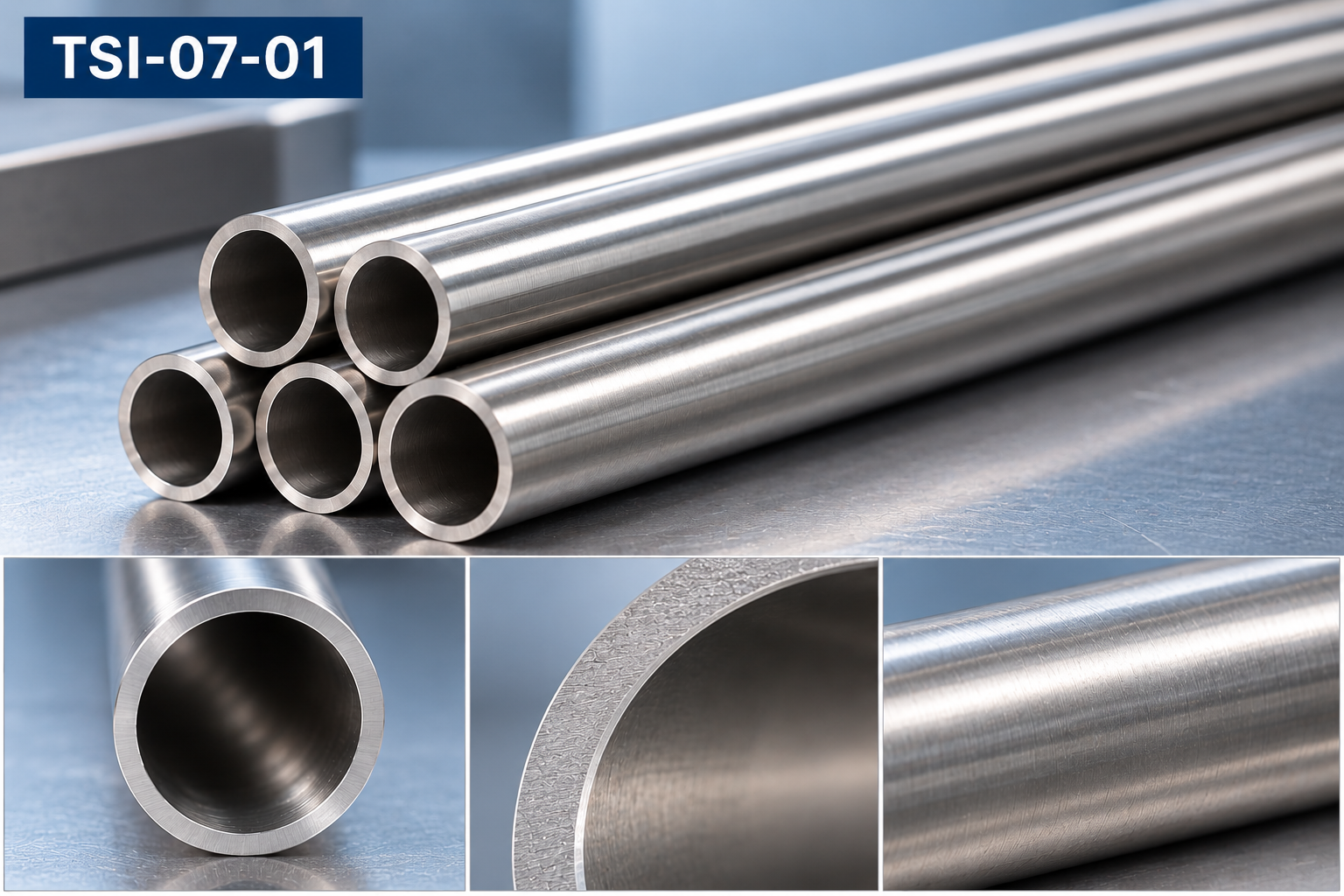
Duplex stainless steel offering a substantial step up in chloride pitting and stress-corrosion resistance over standard austenitic grades.
Sourced to order, subject to specification and enquiry — exact size, wall thickness and connection system confirmed at RFQ.

Super duplex stainless steel for higher-chloride and more demanding corrosive service than standard duplex grade.
Sourced to order, subject to specification and enquiry — exact size, wall thickness and connection system confirmed at RFQ.
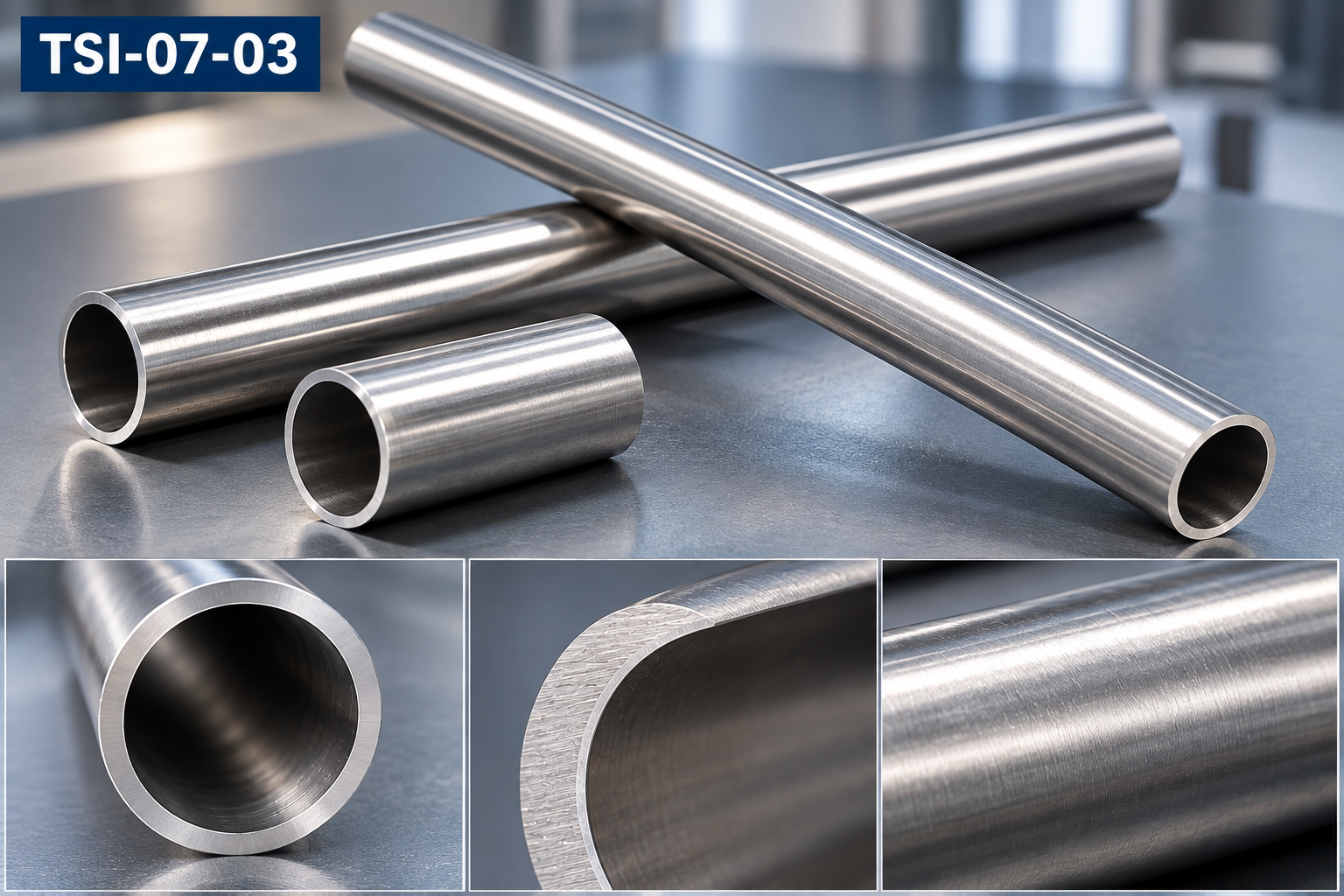
Super duplex stainless steel within the same high-chloride-resistance family as grade 2507.
Sourced to order, subject to specification and enquiry — exact size, wall thickness and connection system confirmed at RFQ.
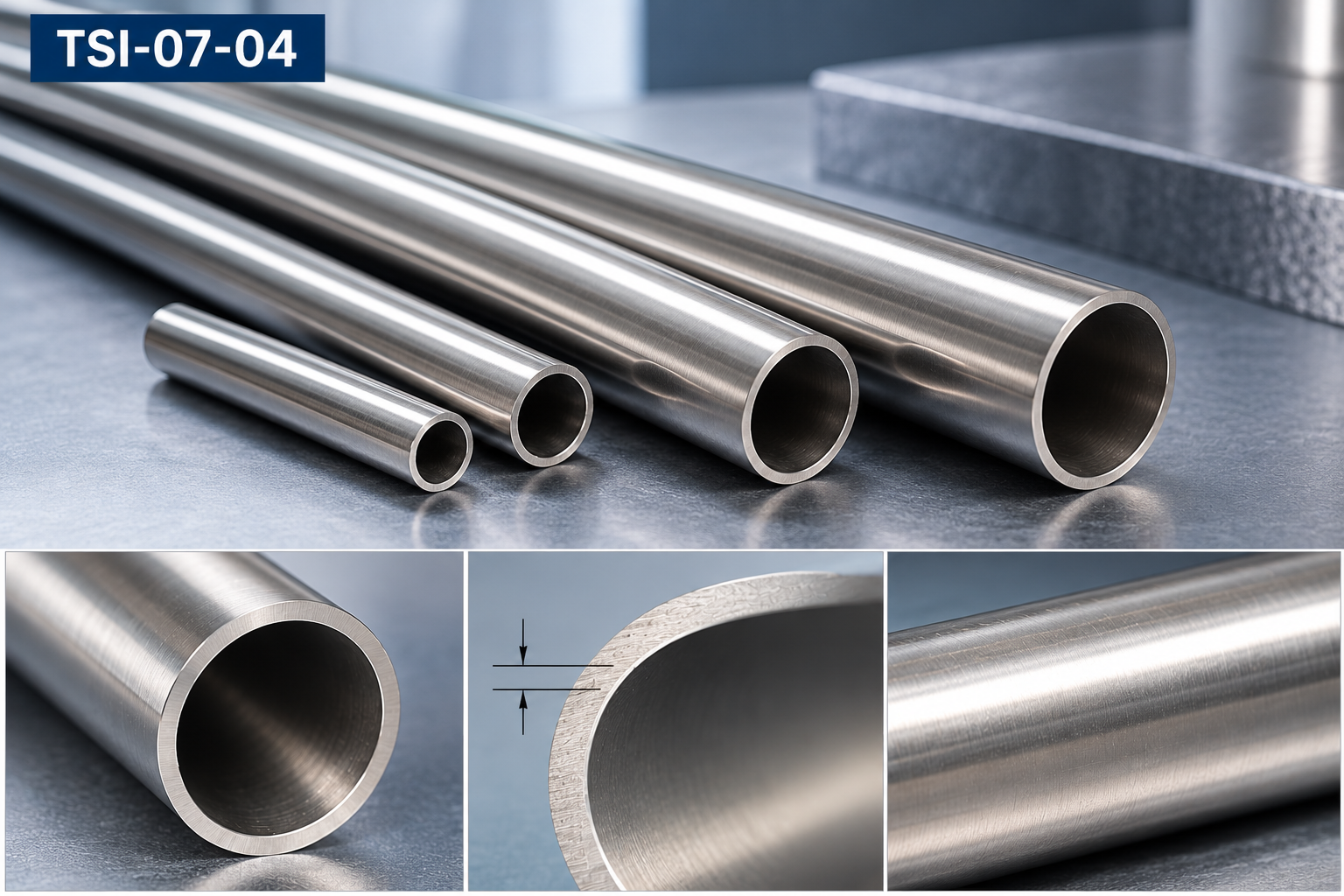
High-molybdenum super-austenitic stainless steel for aggressive chloride-bearing utility and seawater-adjacent service.
Sourced to order, subject to specification and enquiry — exact size, wall thickness and connection system confirmed at RFQ.
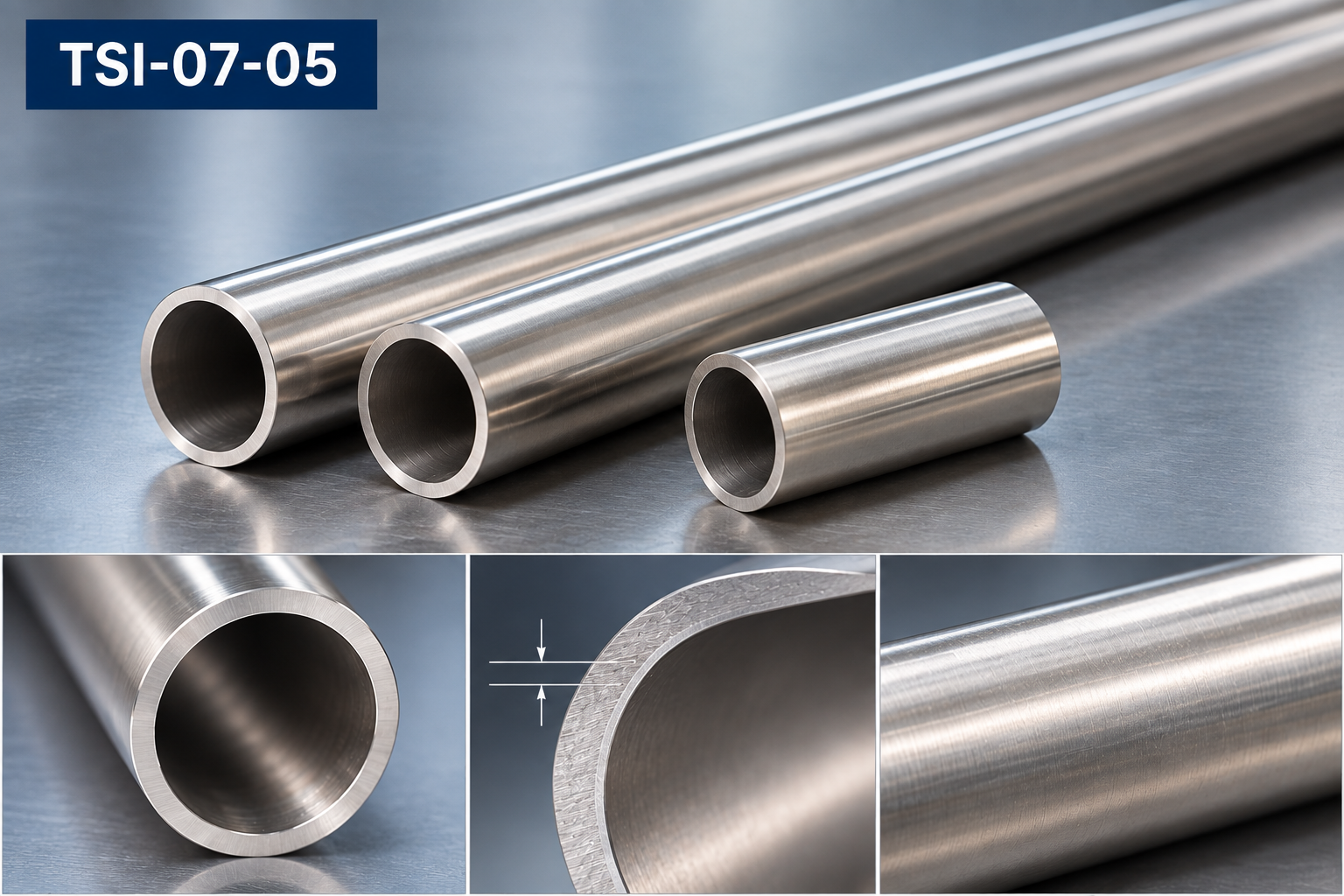
Nickel-chromium-molybdenum alloy suited to a wide service-temperature range and demanding corrosion conditions.
Sourced to order, subject to specification and enquiry — exact size, wall thickness and connection system confirmed at RFQ.
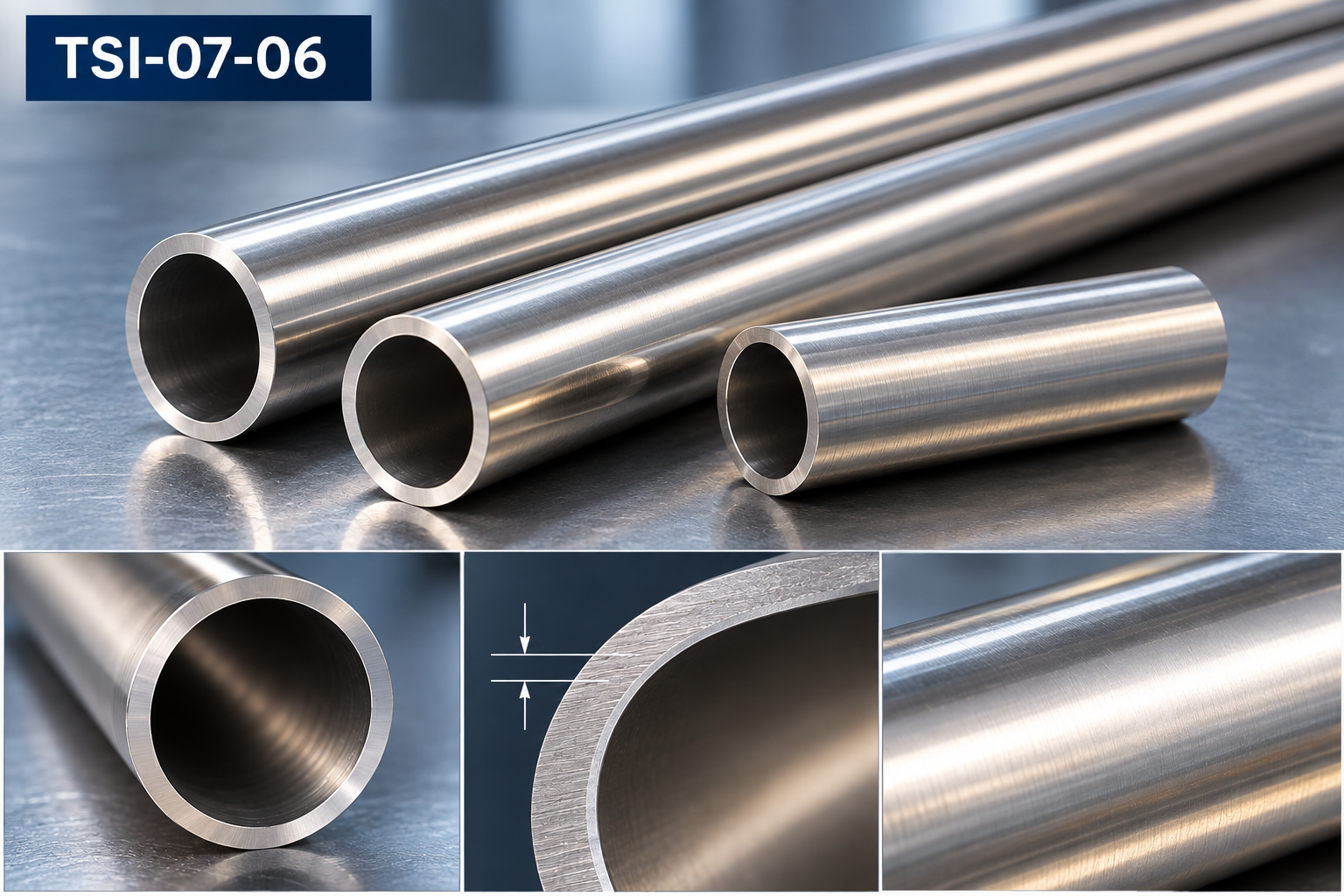
Nickel-iron-chromium alloy commonly specified for chemical injection and similarly corrosive process duty.
Sourced to order, subject to specification and enquiry — exact size, wall thickness and connection system confirmed at RFQ.
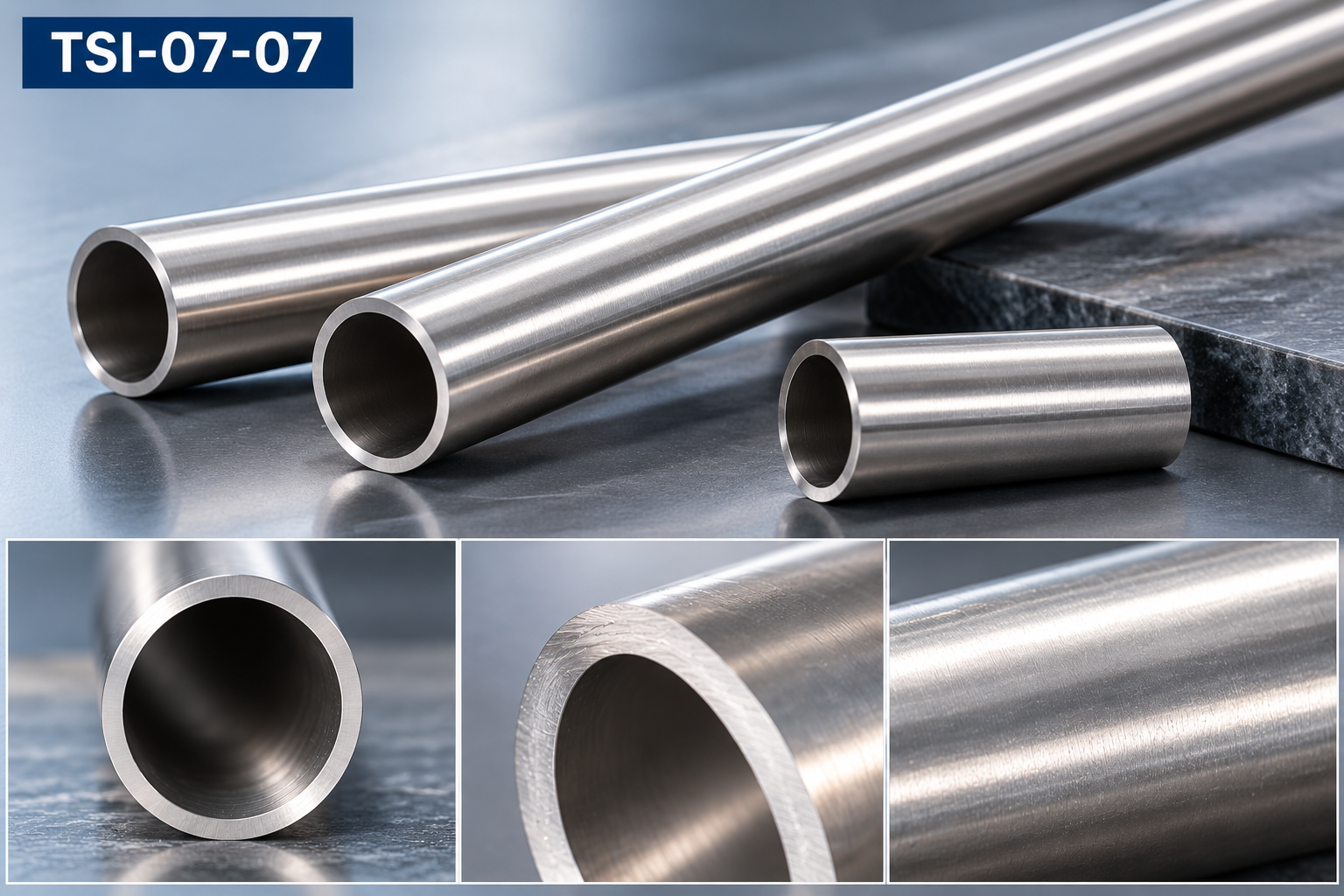
Nickel-molybdenum-chromium alloy for severe reducing and oxidising corrosive environments.
Sourced to order, subject to specification and enquiry — exact size, wall thickness and connection system confirmed at RFQ.
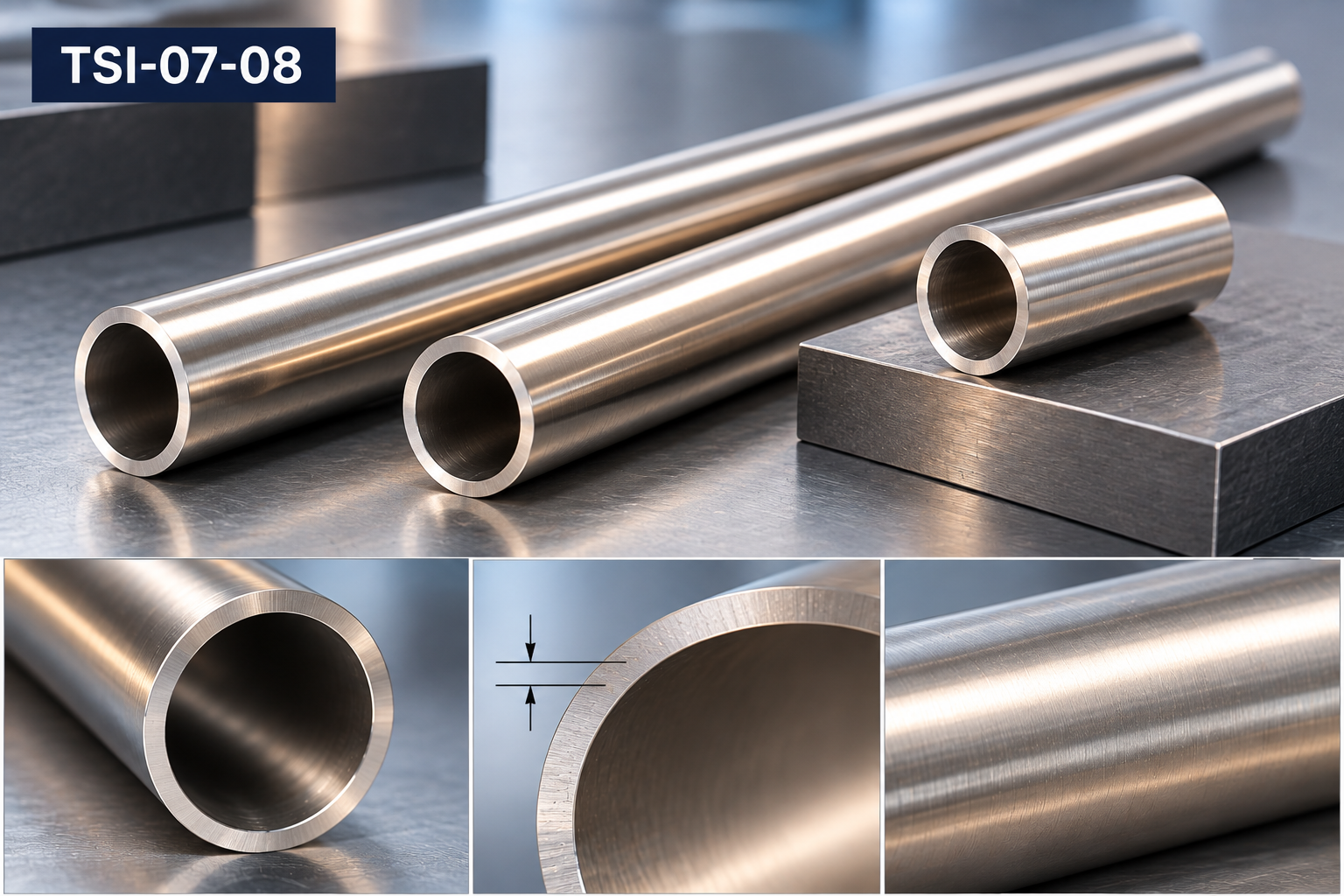
Nickel-copper alloy with established resistance to seawater and many acidic and alkaline media.
Sourced to order, subject to specification and enquiry — exact size, wall thickness and connection system confirmed at RFQ.
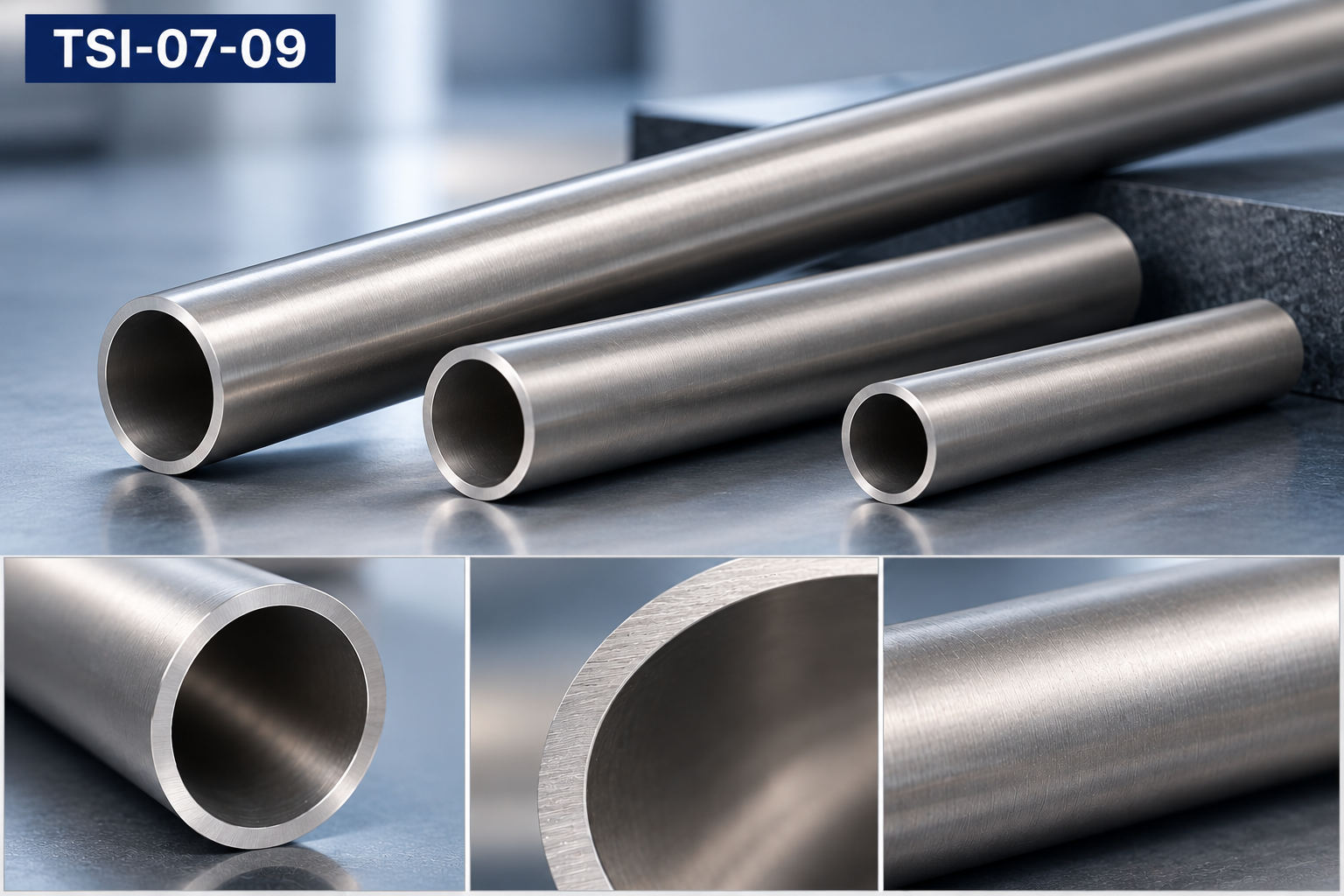
Commercially pure titanium offering excellent seawater and chloride resistance at moderate strength.
Sourced to order, subject to specification and enquiry — exact size, wall thickness and connection system confirmed at RFQ.